
The Structural Limits of AI
Thoughts on some of the foundational constraints for current AI systems and where we're headed in 48 months.

I believe that AI’s limits are structural, not algorithmic.
We have built increasingly capable systems, trained them on larger datasets, and tuned them to optimize performance. But most of that progress has been efficiency, not expansion.
The next set of challenges will not come from better algorithms alone. They will come from limits in data, computation, and energy: the three foundations that define how far intelligence can scale.
Data
Scaling, reinforcement, and fine-tuning improve efficiency within a fixed representational space. They make models faster at pattern recognition and recall, but not necessarily better at forming new abstractions.
We have also reached the edge of available data. Every major corpus of text, code, and images has been scraped, filtered, and repackaged many times over. What remains is either low signal noise, or content locked behind paywalls, permissions, and private datasets. The high quality surface of the internet has already been mined.
That means the next generation of systems cannot rely on simply adding more data. They will need world models -- persistent internal representations that capture verified, real world information and update themselves continuously. A world model is not a static dataset. It is a living structure that learns from real events, integrates sensor and contextual data, and keeps its internal understanding synchronized with reality.
The harder question is how models move beyond what they have already seen. How can they create new information instead of recombining old patterns? Today’s systems can extrapolate within the statistical boundaries of their training data, but true discovery, the ability to generate genuinely novel insights or hypotheses -- remains elusive.
Computation
I believe that intelligence emerges when a system can hold and evolve many possible states at once, when it can explore combinatorial possibilities instead of walking through them one at a time.
Today’s large language models do not yet do this. Once a model generates its first token, it tends to commit to a single path. All other plausible continuations are discarded. It is efficient but limiting, as it prevents the model from considering multiple interpretations, or reasoning paths in parallel.
An emerging approach called Superposed Decoding attempts to address this. Instead of discarding alternate continuations, it keeps several active at once and reconciles them later in the process. The model effectively holds multiple potential futures before deciding which one best fits. It is still early research, but it points toward a shift from linear inference to exploratory reasoning.
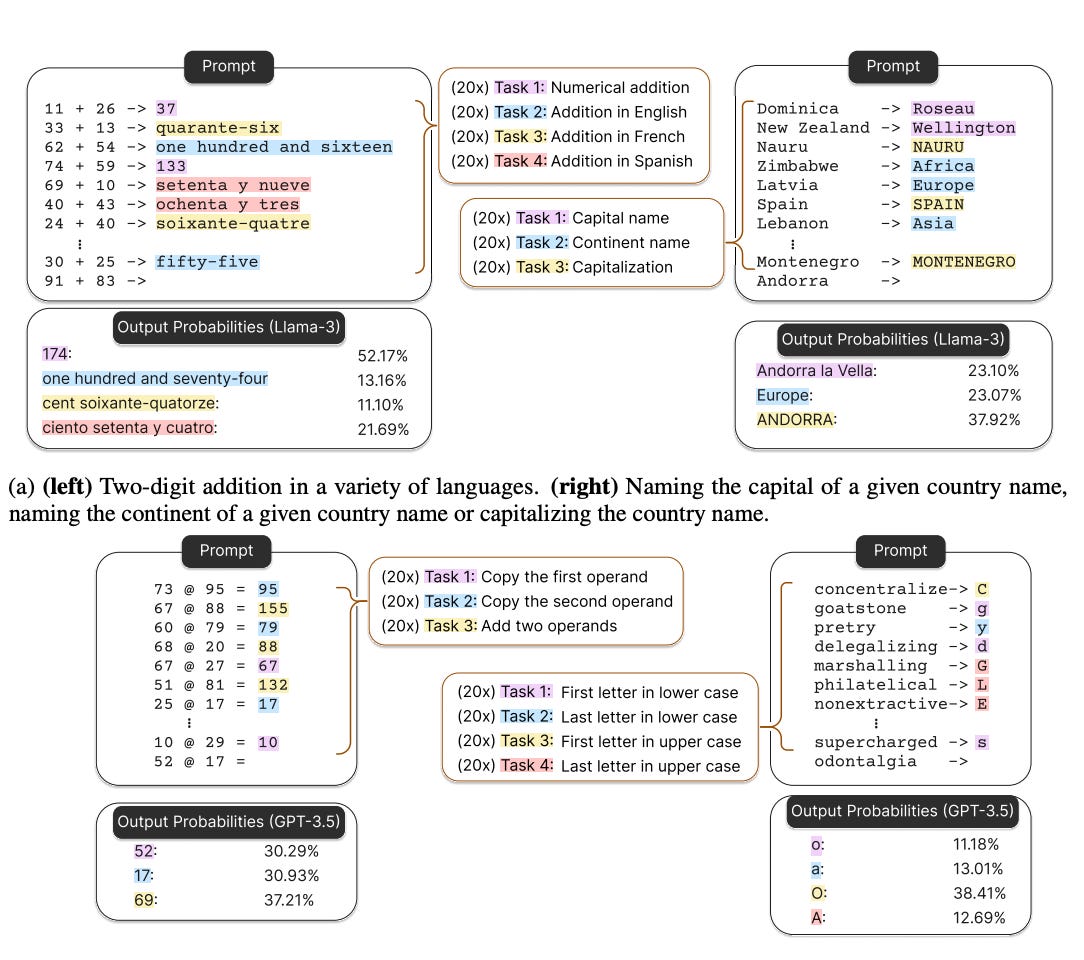
A recent paper on Task Superposition shows that transformers may already be starting to exhibit this behavior. Researchers found that large models can blend and maintain multiple task states within a single inference, suggesting that parallel reasoning is beginning to appear as an emergent property of scale.
Power and Policy
Doing parallel reasoning at scale, however, runs straight into physics. Our hardware was not designed for this kind of workload, and our power grids were not built for this level of demand. Each incremental gain in capability requires exponentially more computation and energy.
At some point, the economics of AI will collapse before the science does.
When that happens, the bottleneck will move from engineering to policy. Once models begin consuming grid scale energy, progress will depend less on architecture and more on geopolitics: energy supply, environmental regulation, chip fabrication, and access to compute infrastructure.
The result will be uneven. Countries with cheap, abundant energy and domestic chip supply will pull ahead. Others will fall behind. AI progress will not slow evenly; it will fragment along political and infrastructural lines.
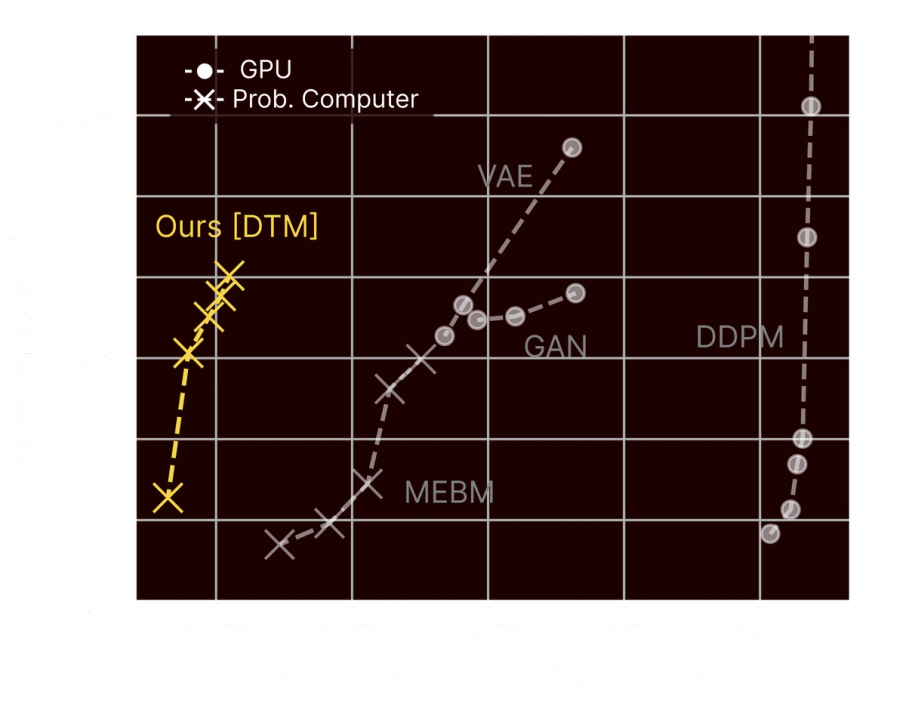
In the short term, companies like Extropic will push the limits of efficiency with new architectures that can deliver more capability per watt. Some will be acquired by larger players, as PA Semi was by Apple. Others may grow into the next NVIDIA. But even these innovations only delay the inevitable. The structural limits still remain.
Quantum solutions
Over the longer term, I believe quantum hardware will reset the equation entirely. Coherence and entanglement allow computation across many states simultaneously. This would make combinatorial reasoning as described above a property of the hardware itself rather than a simulation on top of it.
At the current pace of quantum progress, traditional scaling will eventually hit a wall. Quantum-assisted architectures -- specialized decoders or co-processors -- will take over as the next substrate for computation. Think of them as the next generation of GPUs, a new kind of QPU.
A QPU could evaluate many reasoning paths in parallel and then converge on the most promising one. In practical terms, it would be the hardware equivalent of what transformers are beginning to approximate in software: reasoning in superposition.
Where AI Goes Next
6 to 24 months
Decoding becomes smarter. Superposed decoding keeps multiple reasoning paths alive longer, reducing generation collapse and producing more coherent, multi-step reasoning.
Agents evolve into parallel reasoners. Instead of serial chains of API calls, they maintain several intelligent hedges that converge, integrating memory, just-in-time data, and internal world models to stay synchronized with reality.
24 to 48 months
Scaling collides with physical infrastructure limits. Energy, regulation, and supply chains dictate who can build and operate frontier systems. This will also lead to a giant technology crash, and a correction of markets.
Quantum co-processors emerge as the next layer of differentiation, resetting the economics of computation and opening new frontiers for parallel reasoning.
The next leap in AI will not come from just scaling larger versions of models as we know them, or bigger datasets. It will come from new substrates: world model data sources that remain live, compute architectures that reason in parallel, and energy infrastructures that can sustain them.
Thanks for writing this, it clarifies a lot. Your analysis of structural limits and the data plateau is truely insightful, defining the next frontier for AI. Could the challenge also lie in how we fundamentally define and measure 'new abstraction' for non human intelligence?